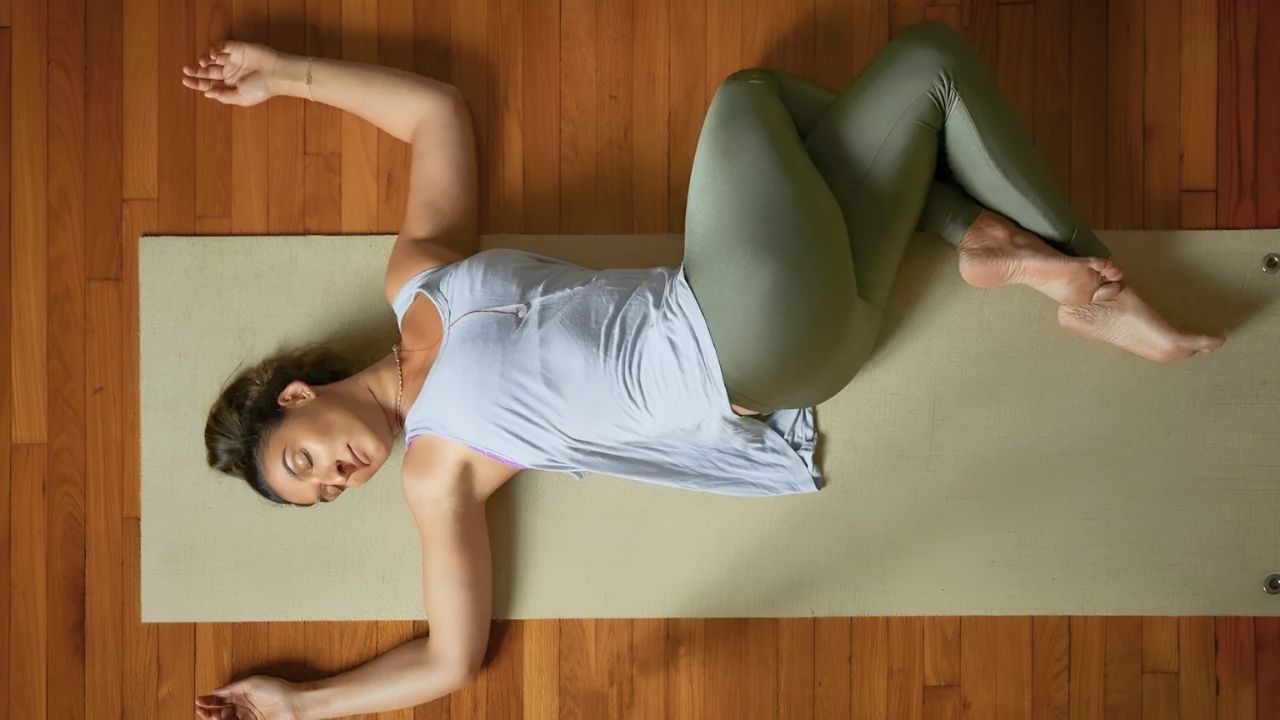
Stress-Free Mind in 30 Minutes: Modern life rarely slows down. Notifications keep buzzing, work demands pile up, and personal responsibilities quietly stretch your mental capacity. Over time, this constant stimulation builds hidden tension in your body and mind. A slow, relaxing yoga routine can act like a reset button. In just 30 minutes, gentle stretches and mindful breathing can calm racing thoughts, lower cortisol levels, and restore emotional balance. This carefully designed routine focuses on softness rather than intensity, helping you feel lighter, clearer, and deeply refreshed.
Breathe Deeply Feel Instantly Lighter
The foundation of a stress-free mind begins with conscious breathing. Sit comfortably with your spine upright and shoulders relaxed. Place one hand on your belly and the other on your chest. Inhale slowly through your nose, letting your belly rise first, then your chest. Exhale gently through your mouth. Continue this rhythmic breathing for five minutes. Deep breathing signals your nervous system to shift from stress mode into relaxation mode, instantly slowing your heart rate and quieting mental noise.
Neck And Shoulders Release Pressure Fast
Stress often settles in the neck and shoulders without you realizing it. Start by slowly tilting your head toward one shoulder, holding for a few breaths before switching sides. Roll your shoulders backward and forward in slow circles. Lift your shoulders toward your ears, hold briefly, then release completely. These simple movements increase circulation and relieve muscle tightness. Moving slowly and intentionally makes the body feel safe, which encourages your mind to relax alongside it.
Gentle Seated Forward Fold Calm
Sit with your legs extended comfortably in front of you. Inhale to lengthen your spine, then exhale as you gently fold forward from your hips. Keep your knees slightly bent if needed. This pose stretches the back body while encouraging introspection and mental quietness. Avoid forcing the stretch; focus instead on soft breathing. Staying here for two to three minutes allows your nervous system to settle and creates a peaceful connection between breath and movement.
Slow Cat Cow Flow Soothes Spine
Come onto your hands and knees for a slow Cat Cow sequence. As you inhale, gently arch your back and lift your chest forward. As you exhale, round your spine and tuck your chin toward your chest. Keep the movement fluid and unhurried. This dynamic stretch improves spinal mobility while releasing emotional tension stored in the back. When done slowly, it becomes almost meditative, helping you feel grounded and mentally centered.
Child Pose For Deep Comfort
Lower your hips back toward your heels and extend your arms forward into Child Pose. Rest your forehead on the mat or a cushion for added support. This posture encourages surrender and relaxation. Breathe deeply into your lower back and notice how your body softens with each exhale. Holding this pose for several minutes creates a sense of emotional safety, making it easier for anxious thoughts to fade naturally.
Standing Forward Fold Refresh
Rise slowly to standing and fold forward gently. Let your head hang heavy and allow gravity to stretch your spine. Keep your knees slightly bent to protect your lower back. This pose increases blood flow toward the brain, which can improve focus and mental clarity. Sway gently from side to side, staying relaxed. After about two minutes, you may notice a subtle shift in your mood and overall energy.
Seated Twist Detox Stress
Return to a seated position and gently twist your torso to one side. Place one hand behind you for support and the other on your opposite knee. Inhale to lengthen your spine, exhale to deepen the twist slightly. Twists stimulate digestion and release tension through the midsection. They also symbolically encourage letting go of emotional stress. Hold each side calmly, breathing slowly and keeping your jaw and shoulders relaxed.

Legs Up Wall Total Reset
Lie on your back near a wall and extend your legs upward. Allow your arms to rest comfortably beside you with palms facing up. This restorative posture improves circulation and reduces fatigue in tired legs. It is especially helpful after long hours of sitting or standing. Close your eyes and breathe naturally for five full minutes. This position encourages full-body relaxation while calming the mind deeply.
Body Scan For Mental Clarity
Remain lying down and shift into a gentle body scan meditation. Starting from your toes, slowly bring awareness to each part of your body, consciously releasing tension as you move upward. Notice areas that feel tight and allow them to soften with each breath. This mindful awareness technique strengthens the connection between body and mind, creating lasting calm even after the yoga session ends.

Create A Daily Calm Ritual
Consistency transforms simple routines into powerful habits. Practicing this 30-minute slow yoga flow daily can improve sleep quality, reduce anxiety, and enhance emotional resilience. Choose a quiet space, dim the lights, and perhaps play soft instrumental music. Avoid rushing through poses. The goal is not flexibility but relaxation. Over time, your body will respond more quickly to these calming signals, making stress easier to manage.
Stress does not disappear overnight, but small, intentional practices create meaningful change. This slow relaxing yoga routine proves that you don’t need intense workouts or complicated techniques to feel better. Just 30 minutes of gentle movement and mindful breathing can clear your thoughts, relax your muscles, and restore emotional balance. Give yourself this half hour regularly, and you may discover a calmer, more centered version of yourself waiting beneath the noise.