From War Camp to Wellness: Pilates is now a global fitness phenomenon practiced in luxury studios, living rooms, and rehabilitation centers worldwide. Yet its roots trace back to a time of uncertainty, hardship, and limited resources. The method that millions rely on for core strength, flexibility, and mental clarity was not born in a glamorous gym. It emerged during World War I under extraordinary circumstances. The transformation of Pilates from survival strategy to modern wellness movement is a powerful story of resilience, innovation, and vision.
A Childhood That Sparked Determination
Joseph Pilates was born in 1883 in Germany, and his early years were marked by physical challenges. Struggling with asthma, rickets, and general weakness, he refused to accept fragility as his fate. Instead, he immersed himself in studying anatomy, physical culture, and various forms of exercise including gymnastics and boxing. His personal mission was clear build a body so strong that illness would no longer define him. That determination became the backbone of his future method.

Self Study Became His Superpower
Unlike many fitness pioneers of his era, Joseph Pilates was largely self taught. He observed animals in motion, fascinated by how they stretched and moved naturally. He studied Eastern practices such as yoga and martial arts along with Western strength training techniques. This blend of philosophies shaped his understanding that strength and flexibility must coexist. He believed true fitness meant balanced muscle development, controlled breathing, and total body awareness working together as one system.
War Time Creativity Changed Everything
When World War I broke out, Pilates was living in England and was interned as a German national. Inside the confinement camp, physical and mental health declined for many detainees. Joseph Pilates saw an opportunity to apply his training ideas. He began organizing exercise sessions to keep fellow prisoners active and mentally focused. With limited space and no equipment, he refined movements that relied on body weight, breath control, and precise execution.
Hospital Beds Inspired Equipment Design
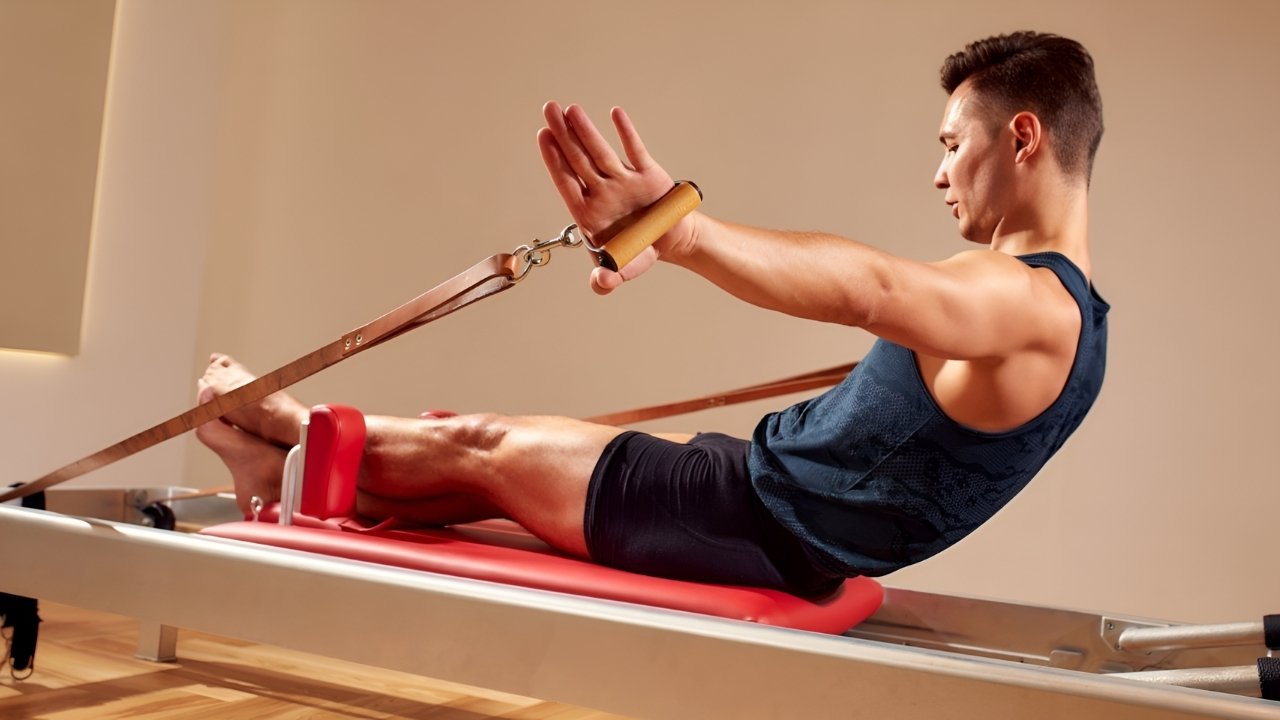
Later, while assisting injured soldiers in an internment hospital, Pilates improvised resistance training tools using bedsprings attached to hospital beds. This innovation allowed bedridden patients to strengthen muscles safely without standing. These early spring based systems laid the groundwork for what would eventually become the Reformer and other Pilates machines. The idea of using controlled resistance to guide movement was revolutionary for rehabilitation at the time and remains central to Pilates today.
Contrology Defined The Philosophy
Joseph Pilates named his method Contrology because he believed the mind must direct every movement. Unlike chaotic or aggressive workouts, Contrology emphasized focus, flow, and control. He insisted that each repetition be deliberate and aligned with proper breathing patterns. The goal was not exhaustion but efficiency. He promoted spinal alignment, joint mobility, and core engagement as the keys to long term vitality. This philosophy distinguished Pilates from other fitness trends of the early twentieth century.

New York Became The Launchpad
In the 1920s, Joseph Pilates emigrated to the United States and opened a studio in New York City with his wife Clara. Their location near dance studios attracted professional dancers seeking injury prevention and faster recovery. Word spread quickly among performers who valued strength without bulk. The method became known as a secret weapon for enhancing flexibility and control. From that small studio, Pilates quietly began building its global reputation.
Dancers Turned Into Ambassadors
Many of Joseph Pilates earliest students were dancers who later became instructors themselves. These first generation teachers preserved his techniques and carried them forward after his death in 1967. Because dancers traveled frequently, they introduced Pilates to new cities and countries. Their influence helped transform Pilates from a niche rehabilitation method into a respected training system embraced by athletes, performers, and eventually the general public.
Core Strength Took Center Stage
One of Pilates most lasting contributions to modern fitness is its emphasis on the powerhouse, now commonly known as the core. Long before core training became a mainstream concept, Joseph Pilates understood that stability begins in the abdomen, lower back, hips, and pelvic floor. Strengthening this center improves posture, balance, and coordination. Today, physical therapists and trainers worldwide incorporate Pilates inspired exercises into rehabilitation and athletic programs.
From Niche To Global Movement
By the late twentieth century, Pilates experienced a massive surge in popularity. Celebrities, athletes, and wellness influencers embraced its low impact yet highly effective approach. Studios began appearing in major cities around the world. Modern adaptations introduced group classes, mat based sessions, and contemporary variations while still honoring foundational principles. Technology has further expanded access, allowing people to practice Pilates through virtual platforms and digital programs.

Science Validates The Method
Recent research supports many benefits that Joseph Pilates claimed decades ago. Studies indicate that consistent Pilates practice can improve flexibility, reduce chronic lower back pain, enhance muscular endurance, and support mental well being. Because movements are controlled and adaptable, Pilates suits individuals of different ages and fitness levels. What began as an improvised health strategy in a war environment has evolved into an evidence supported wellness discipline.
A Legacy Built On Resilience
The story of Pilates proves that innovation often emerges from adversity. Joseph Pilates transformed personal weakness and wartime confinement into a system that continues to empower millions. His belief that physical strength and mental focus are deeply connected remains relevant in today’s fast paced world. Pilates is more than a workout. It is a reminder that discipline, creativity, and resilience can turn even the most challenging circumstances into lasting positive change.
Final Word On The Pilates Revolution
From confined war camps to cutting edge fitness studios, the journey of Pilates is nothing short of remarkable. Its origins reflect human determination and the power of thoughtful movement. More than a century later, Pilates continues to strengthen bodies, sharpen focus, and promote balanced health. Every controlled breath and precise movement carries forward the vision of a man who believed that true wellness begins with mastering your own body.